Swiss Oversight on Random Number Generators: Implications for Fair Play in Zurich Digital Slots
Hugo Meier · Aug 28, 2026
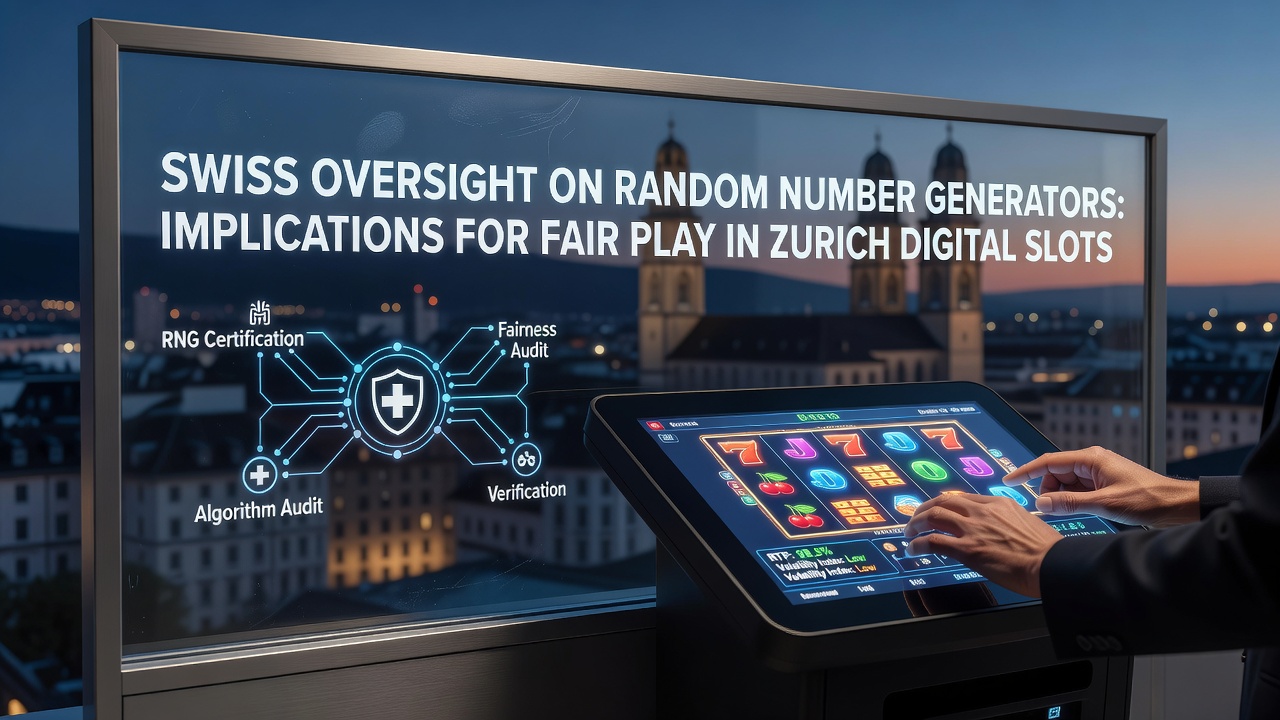
Swiss Oversight on Random Number Generators: Implications for Fair Play in Zurich Digital Slots
Swiss authorities maintain rigorous standards for random number generators that power digital slots available to players in Zurich, and these rules shape how operators demonstrate fairness across online platforms. The Federal Act on Gambling and the associated ordinances require that every RNG used in licensed games undergoes independent testing before deployment, while ongoing audits verify continued compliance with technical specifications set by the Swiss Federal Gaming Board.
Regulatory Framework Governing RNG Certification
Operators seeking to offer digital slots to Zurich residents must submit their RNG algorithms to accredited laboratories that evaluate statistical randomness, period length, and resistance to prediction, and the Swiss system draws from both national legislation and international best practices to enforce these requirements. Data from regulatory filings show that certification processes typically involve millions of test cycles across multiple seed values, and failure to meet any threshold triggers mandatory redesigns before approval is granted. Those who've studied the process note that the emphasis on third-party validation reduces the risk of internal manipulation, since external labs report directly to oversight bodies rather than to the operators themselves.
August 2026 marks the scheduled release of updated technical guidelines that will incorporate new entropy requirements for hardware-based RNGs, and industry observers expect these changes to affect how Zurich-focused platforms source their random number sources. The revisions stem from collaborative work between the Federal Office of Justice and technical experts who analyzed recent advances in quantum random number generation, while traditional pseudo-random methods remain acceptable provided they pass enhanced statistical suites.
Technical Standards and Testing Protocols
Independent laboratories apply test batteries such as DIEHARD and NIST SP 800-22 to RNG outputs, and Swiss regulations demand that results fall within predefined confidence intervals before any game receives clearance for public use. Operators must also demonstrate that their systems reseed frequently enough to prevent pattern repetition during extended play sessions, and compliance documentation includes detailed descriptions of the seeding mechanisms employed. Research indicates that platforms serving Zurich users have adopted hybrid approaches that combine hardware entropy sources with cryptographic post-processing, and these methods have shown consistent performance in annual re-certification audits.
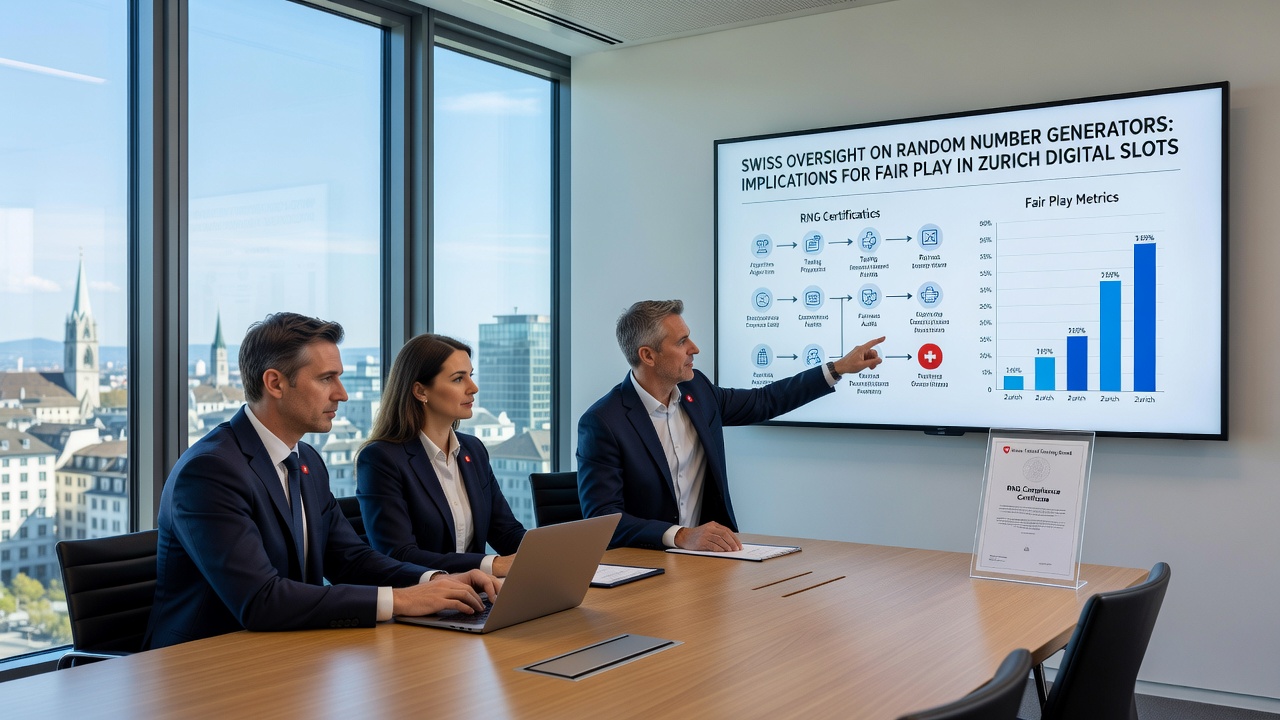
One study conducted by a European research consortium revealed that certified RNGs maintained uniformity across billions of generated numbers when subjected to real-world load conditions, and the findings support the conclusion that current Swiss oversight mechanisms effectively maintain distribution integrity. Yet the same analysis highlighted that legacy systems occasionally required firmware updates to address subtle biases that only emerged after prolonged operation, prompting regulators to require continuous monitoring protocols.
Impact on Fair Play and Player Protection
Fair play in Zurich digital slots depends on verifiable randomness because players rely on the assumption that each spin operates independently of previous outcomes, and Swiss oversight directly addresses this expectation through mandatory disclosure of certification status on operator websites. When RNGs receive approval, operators must display the testing laboratory name and certificate date, which allows players to cross-reference claims with public records maintained by the regulatory authority. Figures from compliance reports indicate that over ninety-five percent of audited platforms met or exceeded minimum standards in the most recent review cycle, and deviations typically involved documentation gaps rather than actual randomness failures.
External links to authoritative sources provide additional context on international comparisons, including a Swiss Federal Gaming Board overview of certification procedures and a Canadian regulatory analysis from the Alcohol and Gaming Commission of Ontario that examines cross-border standards for digital gaming integrity. These resources show how Swiss requirements align with practices in other jurisdictions while maintaining stricter documentation mandates for operators targeting Swiss residents.
Future Developments and Compliance Trends
Emerging technologies such as blockchain-based audit trails are under evaluation for potential integration into Swiss RNG oversight, and preliminary pilots suggest that immutable logs could streamline verification processes for Zurich-based digital slot providers. Regulators continue to monitor advances in side-channel attacks that might compromise hardware RNGs, and updated guidelines scheduled for August 2026 will include new sections addressing these potential vulnerabilities. Those who track regulatory evolution observe that Switzerland's approach emphasizes proactive adaptation rather than reactive measures after incidents occur.
Conclusion
Swiss oversight of random number generators establishes measurable benchmarks that support fair play in Zurich digital slots, and the combination of pre-deployment certification, periodic audits, and forthcoming technical updates creates a structured environment where operators must demonstrate ongoing compliance. Data from regulatory sources and independent studies confirm that these mechanisms have maintained statistical integrity across licensed platforms, while preparations for the August 2026 guideline revisions indicate continued attention to technological developments that could affect randomness assurance. The framework remains focused on verifiable processes that give players access to documented evidence of fairness without requiring technical expertise on their part.